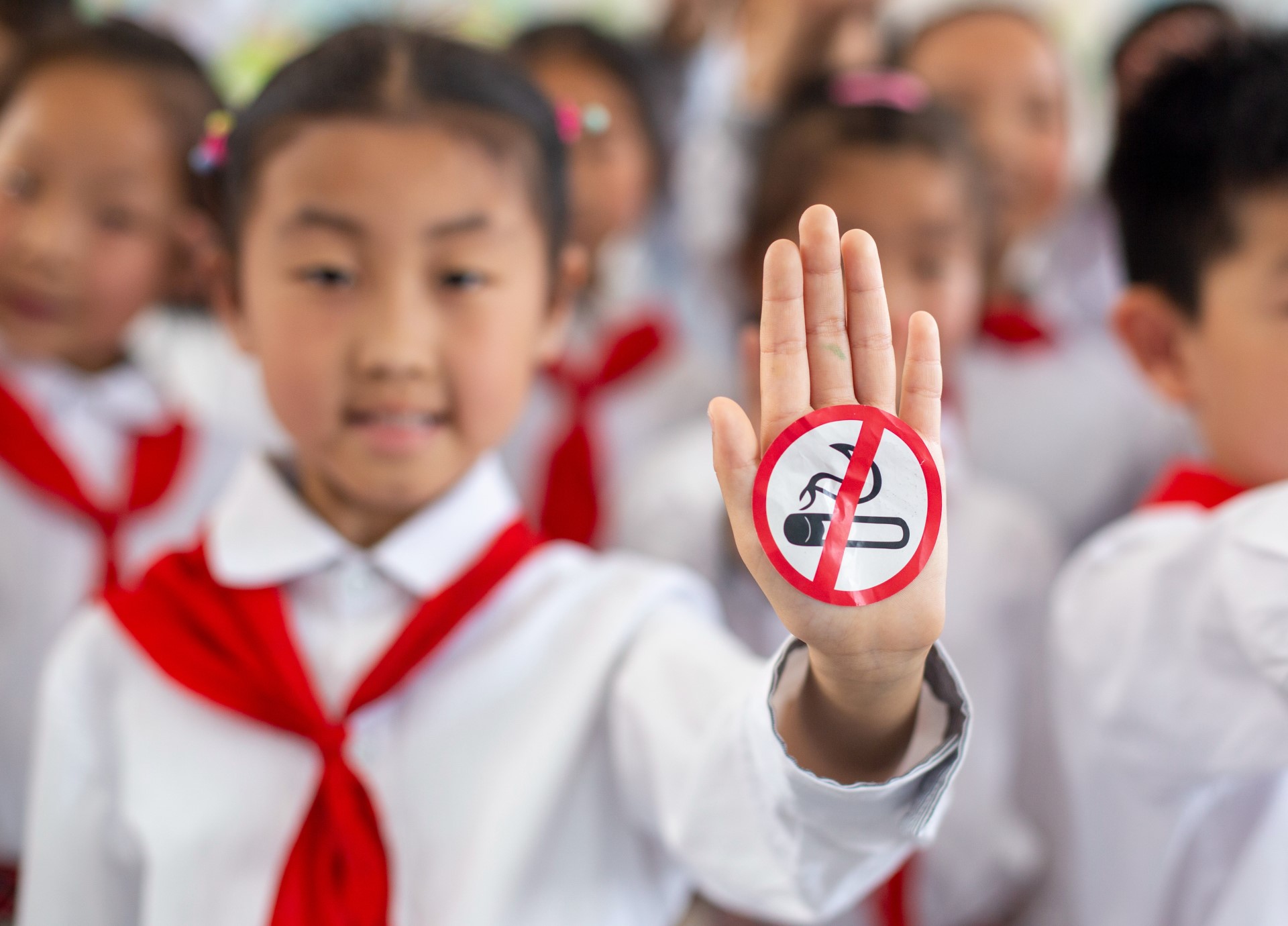
Children participate in an anti-tobacco workshop called "Agent 00 Cigarettes, LILT Mission." The workshop is part of a campaign by LILT (Italian League For The Fight Against Cancer) to educate kids about the dangers of smoking.
Tobacco
Tobacco use is a major risk factor for cardiovascular and respiratory diseases, over 20 different types or subtypes of cancer, and many other debilitating health conditions. Every year, more than 7 million people die from tobacco use. Most tobacco-related deaths occur in low- and middle-income countries, which are often targets of intensive tobacco industry interference and marketing.
Tobacco can also be deadly for non-smokers. Second-hand smoke exposure has also been implicated in adverse health outcomes, and is estimated to cause over 1.6 million deaths annually. Smoking while pregnant can lead to several life-long health conditions for babies.
Heated tobacco products (HTPs) contain tobacco and expose users to toxic emissions, many of which cause cancer and are harmful to health. Electronic nicotine delivery systems (ENDS) and electronic non-nicotine delivery systems (ENNDS), commonly known as e-cigarettes, do not contain tobacco and may or may not contain nicotine, but are harmful to health and undoubtedly unsafe. Nicotine, which is naturally present in tobacco and added to many ENDS, is highly addictive and drives dependence, particularly among young people.
An estimated 1.2
billion people worldwide use tobacco products, 80% of whom live in low- and
middle-income countries. Reducing tobacco use globally is an imperative for
public health and for sustainable development. Sustainable Development Goal
3.a.1 is to reduce tobacco use in all countries by strengthening the
implementation of the WHO Framework Convention on Tobacco Control (FCTC). Tobacco
use contributes to poverty by diverting household spending from basic needs,
such as food and shelter, to tobacco. This spending behaviour is difficult to
curb because tobacco is so addictive. It also causes premature death and
disability among adults of working age, which leads to reduced household income
and increased health-care costs.
In addition to the
detrimental impact of tobacco on health, the total economic cost of smoking
(from health expenditures and productivity losses together) is estimated to be
around US$ 1.4 trillion per year, equivalent in magnitude to 1.8% of the
world's annual gross domestic product (GDP). Almost 40% of this cost occurs in
developing countries, highlighting the substantial burden these countries
suffer.
Tobacco taxes are
applied in part to combat this effect and are seen as one of the most
cost-effective way of curbing tobacco use, particularly among youth and
low-income populations. A tax increase that increases tobacco prices by 10%
decreases tobacco consumption by about 4% in high-income countries and about 5%
in low- and middle-income countries.
WHO has a long history of leadership in global tobacco control. As far back as 1970, WHO’s main governing body, the World Health Assembly, issued a resolution concerning the health consequences of smoking. In 2003, WHO Member States unanimously adopted the WHO Framework Convention on Tobacco Control (WHO FCTC), which entered into force in 2005.
Through the WHO FCTC, governments have committed to implementing a minimum set of laws and regulations relating to tobacco control. To help countries implement the WHO FCTC, WHO introduced MPOWER in 2007, a package of evidence-based cost-effective measures. MPOWER aims to help countries to reduce the demand for tobacco products through: monitoring tobacco use and prevention policies; protecting people from tobacco use; offering help to quit tobacco use; warning about the dangers of tobacco; enforcing bans on tobacco advertising, promotion and sponsorship; and raising taxes on tobacco. WHO reports on progress made every two years through its flagship publication, the WHO Report on the Global Tobacco Epidemic.

/sexual-and-reproductive-health-and-research-(srh)/contraception-and-fertility-care-(cfc)/tobacco-use-causes-infertility.tmb-549v.jpg?sfvrsn=1ee50ca2_1)
.tmb-549v.png?sfvrsn=9aaa9ba7_2)

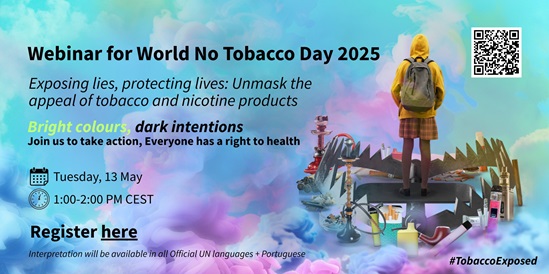
/health-promotion-(hpr)/no-tobacco-(tfi)/webinar_flyer.tmb-549v.jpg?sfvrsn=3c4d8da6_2)
.tmb-549v.png?sfvrsn=73622a7a_1)